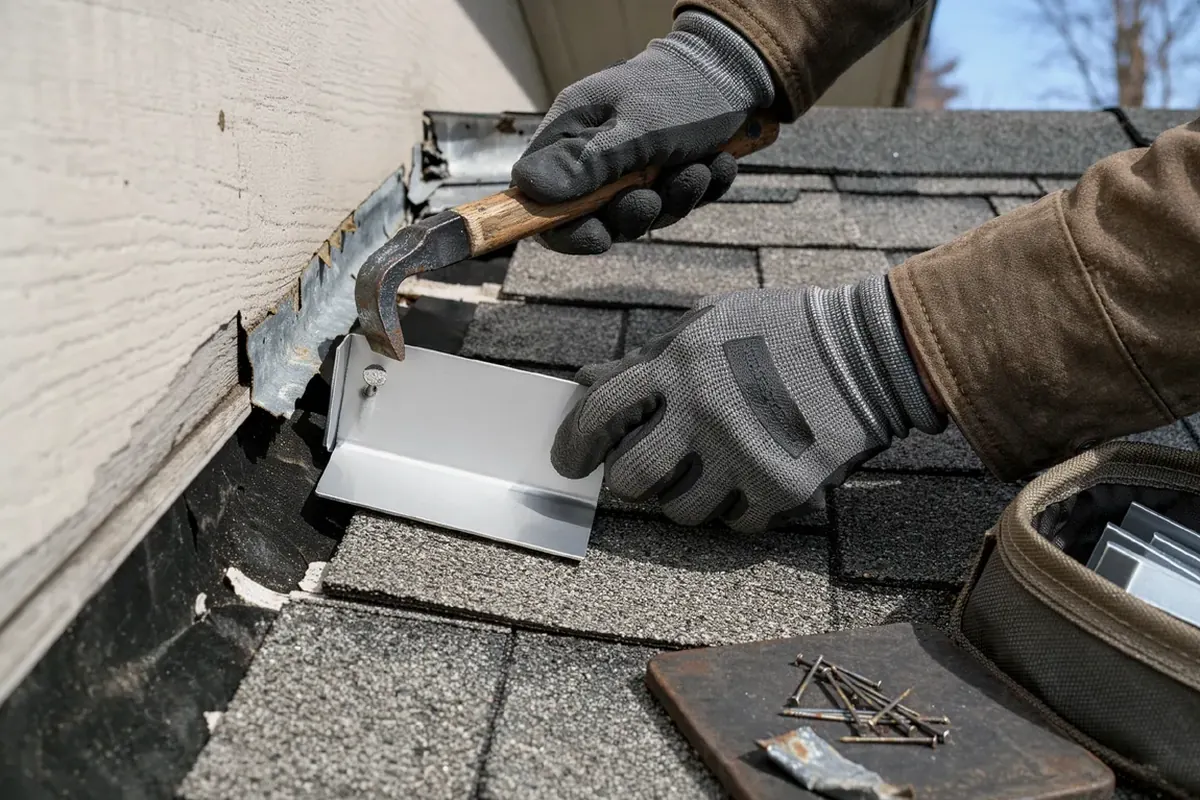
Flashing is the thin metal or membrane that seals the joints where a roof meets a wall, vent, valley or edge, and when it fails water slips behind the roofing. Many leaks that look like worn shingles or tile turn out to be flashing. Call the number on this page to be connected with a local roofing contractor in St. Petersburg.
A repair that is already failing
Gobs of black cement, layers of caulk and a patch that keeps cracking mean the real problem was never fixed. Fresh stains beside an old patch usually mean the flashing underneath needs replacing, not another coat on top. Roofers see this often on older repairs.
Salt air and rust
Near the Gulf and bay, salt in the air speeds corrosion on galvanized steel and exposed nail heads. Aluminum, copper and coated steel last longer in these areas. Rusty edges that flake or pinhole are a sign the metal is nearly spent. Ask what metal the roofer prefers near the water.
Roofs on 1960s houses around St. Petersburg have sometimes been re-covered several times, leaving layered flashing that is hard to read and worth a careful look.
Access changes the job
A low porch roof is easy, while a steep two-story wall line needs staging and safety gear. Tile and metal roofs take extra care to open and close. Mention height and roof type when you call so the roofer can plan the visit. Safety gear and staging add real time.
Roof notes for St. Petersburg
Permit note from the St. Petersburg Building & Permitting: The city's single-family permit exemption does not cover roofing, soffit and fascia, or siding work, so roofing generally needs a permit.
After a storm, read every page before signing and check the contractor's state license on the DBPR site; Florida requires a state contractor license for paid roof work.
Florida's existing-building code caps repairs at a quarter of a roof section in any 12-month span; past that, the full section usually has to meet current code.
Hurricane season runs June 1 through November 30. Lifted tabs, cracked tiles, loose ridge caps and missing shingles are worth a look after any strong blow.
Much of the housing in St. Petersburg dates to the 1960s or earlier, so a tear-off can uncover older layers or plank decking that need extra work.
Calls from St. Petersburg are often matched with roofers who also cover Pinellas Park, Seminole and Largo.
What the roofer looks at
Expect a walk along the walls, vents, valleys and edges, with a close look at laps, fasteners and sealant. The roofer will often check the attic below the suspect joint and may spray water in zones to find exactly where it enters. Expect a clear explanation of what failed.
Safe steps while you wait
Stay off the roof. Inside, set a bucket under any drip, move furniture and rugs, and photograph stains with the date. Place a towel along a wall that shows water. If the ceiling sags, keep everyone away from beneath it. Keep belongings away from the wet area.
Roof Flashing Repair questions in St. Petersburg
How do I know if the leak is from flashing?
What is a pipe boot and why does it fail?
Can I fix loose flashing myself?
Why do older block homes leak at the roof line?
More roofing services in St. Petersburg
Roof Flashing Repair nearby
Helpful guides
Sources
Last updated: