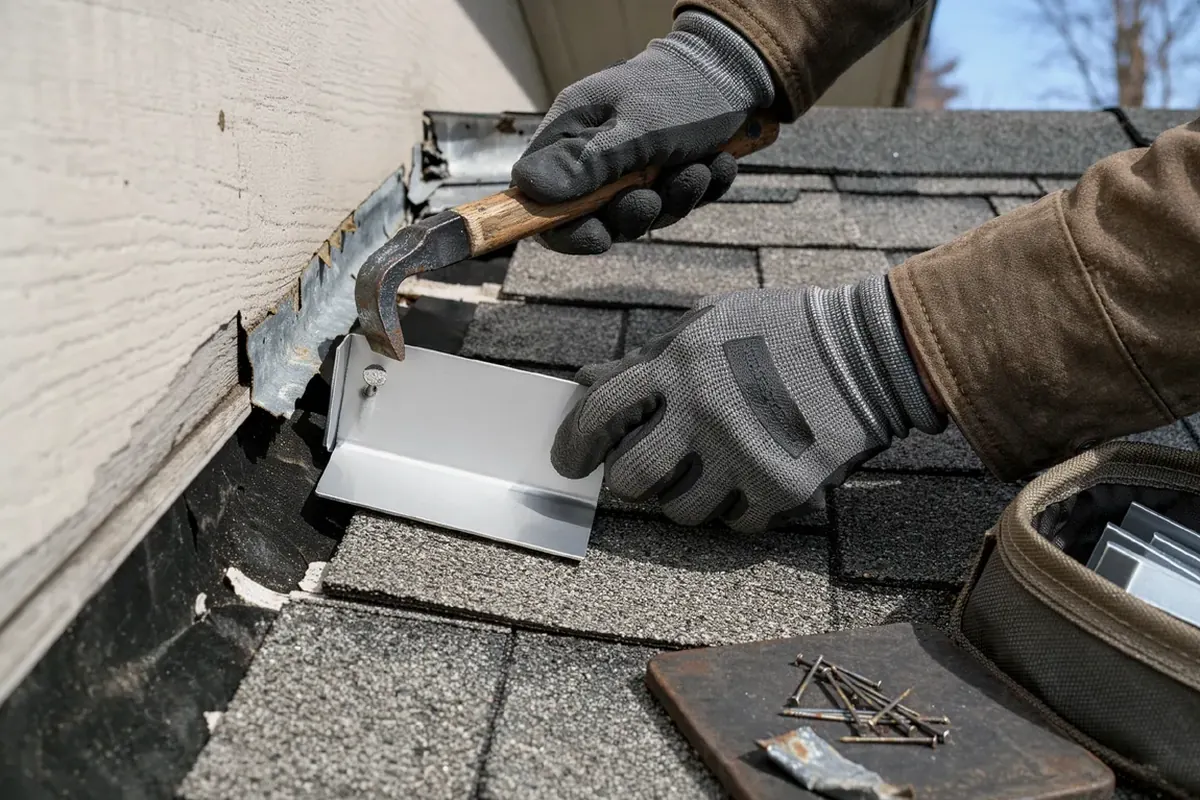
Repair is common when only a few runs of flashing have failed, while widespread rust or loose metal on many joints can point to a bigger job. A roofer can tell which by walking the roof edges and joints. Call the number on this page to be connected with a local roofing contractor in Clearwater.
Stucco-to-roof lines
On block homes where a stucco wall rises above a roof, hairline cracks above the metal and peeling paint near the roof line signal water getting behind the stucco. Staining that runs down the wall below the roof is a clue. Stucco often hides the trouble for years.
Wind-driven rain gets behind it
In a tropical system, rain does not just fall, it is pushed sideways and upward behind laps and counterflashing. Joints that stay dry in normal storms can leak during one. Good laps and tight fasteners matter most in these events. Tight fasteners matter more than extra sealant.
Block homes from the 1970s in Clearwater often have stucco walls rising above low roofs, and the flashing at those lines may be decades old and worn through.
Gulf and bay winds push rain behind flashing near Clearwater, so lifted drip edge and loose wall metal are common after a tropical storm.
Comparing quotes fairly
Ask each roofer to name which joints get new metal, which get sealant and what is being replaced. A line reading seal flashing is too vague to compare. Details on materials and cleanup tell you more than the final figure. Matching scopes make fair comparison possible.
Valleys and open joints
Valley metal that is pinholed or clogged can be replaced with new metal under the roofing, which is more work than patching. Roofers sometimes choose a wider valley to shed storm flow. Ask how the valley will be built to handle heavy rain. This work is more involved than patching.
Know this about Clearwater roofs
On permits, the Clearwater Planning & Development says: A permit is generally not required for repairing a very small, minor roof leak; larger roof work is reviewed by staff.
Florida sets a deadline for storm claims: notice of a new or reopened property claim is due within one year of the date of loss, so don't sit on roof damage.
Florida insurers must offer discounts for wind-loss features such as roof-to-deck attachment and roof-to-wall connections, documented on a mitigation inspection form, so ask whether a reroof can add them.
Homes near the Gulf or Tampa Bay around Clearwater take more wind and salt air, which wears metal flashing and fasteners faster.
Nearby, the same kind of help is available in Dunedin, Safety Harbor and Clearwater Beach.
Skip the caulk gun
Smearing caulk on a roof is tempting, but climbing wet or sun-hot surfaces is how people fall. Caulk over dirty or damp metal rarely bonds, and it can hide the real entry point. Let a roofer handle it with proper materials and gear. Wait for dry weather and a pro.
More about Clearwater
Calls come in from across Clearwater, including around Clearwater Beach, Downtown Clearwater, Clearwater Memorial Causeway (State Road 60).
Harbor Oaks is a National Register-listed historic residential district that runs down to Clearwater Harbor, with homes dating to the early twentieth century, so roofs there are often on older, waterfront houses.
Roof Flashing Repair questions in Clearwater
Can flashing be repaired without a new roof?
Why does flashing leak where the roof meets a stucco wall?
Can a storm damage flashing?
Does flashing repair need a permit?
More roofing services in Clearwater
Roof Flashing Repair nearby
Helpful guides
Sources
Last updated: