A framed chimney chase wrapped in stucco or siding leaks differently from a brick stack, since water can enter through the cover, the wall finish or the base. A roofer can tell which by testing each part. Call the number on this page to be connected with a local roofing contractor in St. Petersburg.
Chase covers and siding
On a framed chase, check for a bent or rusty metal cover on top and stains or bubbling on the stucco or siding below. Gaps at the base, where the chase meets the roof, are common leak points too. Stucco hides leaks for a long time.
Why chimneys leak at the roof
A chimney and a roof move at different rates, so the joint between them flexes through hot days and cool nights. Sealant dries and cracks, metal rusts, and mortar crumbles. Water then finds the gap, usually during a heavy storm. Shaded stacks age differently from sunny ones.
With so much of St. Petersburg's housing dating to the 1960s, brick fireplace stacks with worn mortar and original flashing are the most likely chimneys to leak there.
Doing it with a reroof
A chimney is easiest to flash correctly when the roofing is off. If a reroof is planned, new flashing goes in with the new underlayment. A roofer should tell you whether to wait, repair now or combine the work. Planning ahead avoids paying twice for the same joint.
Before you call in St. Petersburg
Roofing permits for St. Petersburg addresses go through the St. Petersburg Building & Permitting. Its published rule: the city's single-family permit exemption does not cover roofing, soffit and fascia, or siding work, so roofing generally needs a permit.
Under Florida's roof-claim rules, a roof contract must tell you to check coverage with your insurer, and a contractor offering to waive your deductible is breaking state law.
A reroof is a good time to add a secondary water barrier and better roof-to-wall connections; Florida's mitigation inspection form can turn those into windstorm premium discounts.
Hurricane season runs June 1 through November 30. Lifted tabs, cracked tiles, loose ridge caps and missing shingles are worth a look after any strong blow.
Much of the housing in St. Petersburg dates to the 1960s or earlier, so a tear-off can uncover older layers or plank decking that need extra work.
Contractors that take calls here usually also work in Pinellas Park, Seminole and Largo.
What the roofer checks
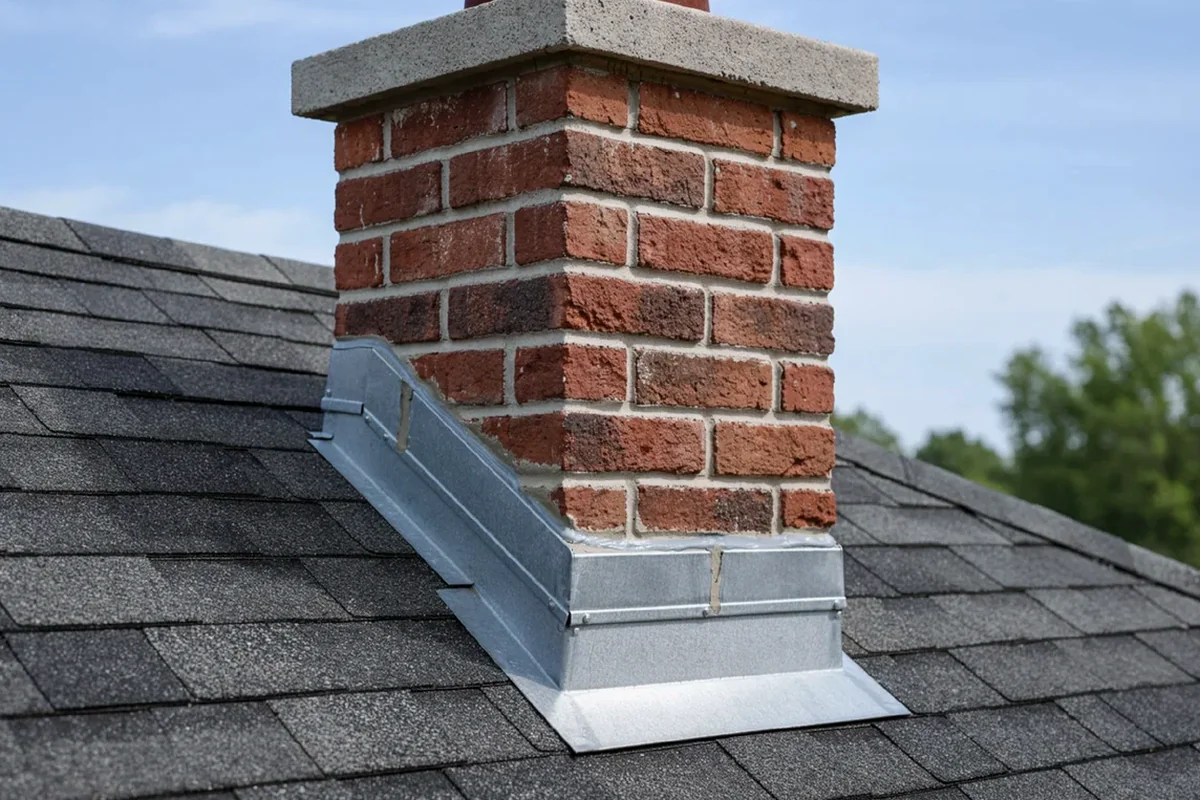
Expect a close look at the step flashing, counterflashing, cricket, crown and cap, plus the roofing around the base and the attic below. A roofer may use water tests on separate sides to pinpoint where water enters. Expect a clear explanation of what failed.
Storm on the way?
With a tropical system approaching, photograph the chimney from the ground first. Move belongings from rooms near the stack. Loose metal on the roof can fly in strong wind, so stay clear of the yard. Never go outside to check during a storm.
Chimney Flashing Repair questions in St. Petersburg
How do I know if the leak is the flashing or the chimney itself?
Do framed chimney chases leak differently?
Does salt air affect chimney flashing?
Why do older brick chimneys leak more?
More roofing services in St. Petersburg
Chimney Flashing Repair nearby
Helpful guides
Sources
Last updated: