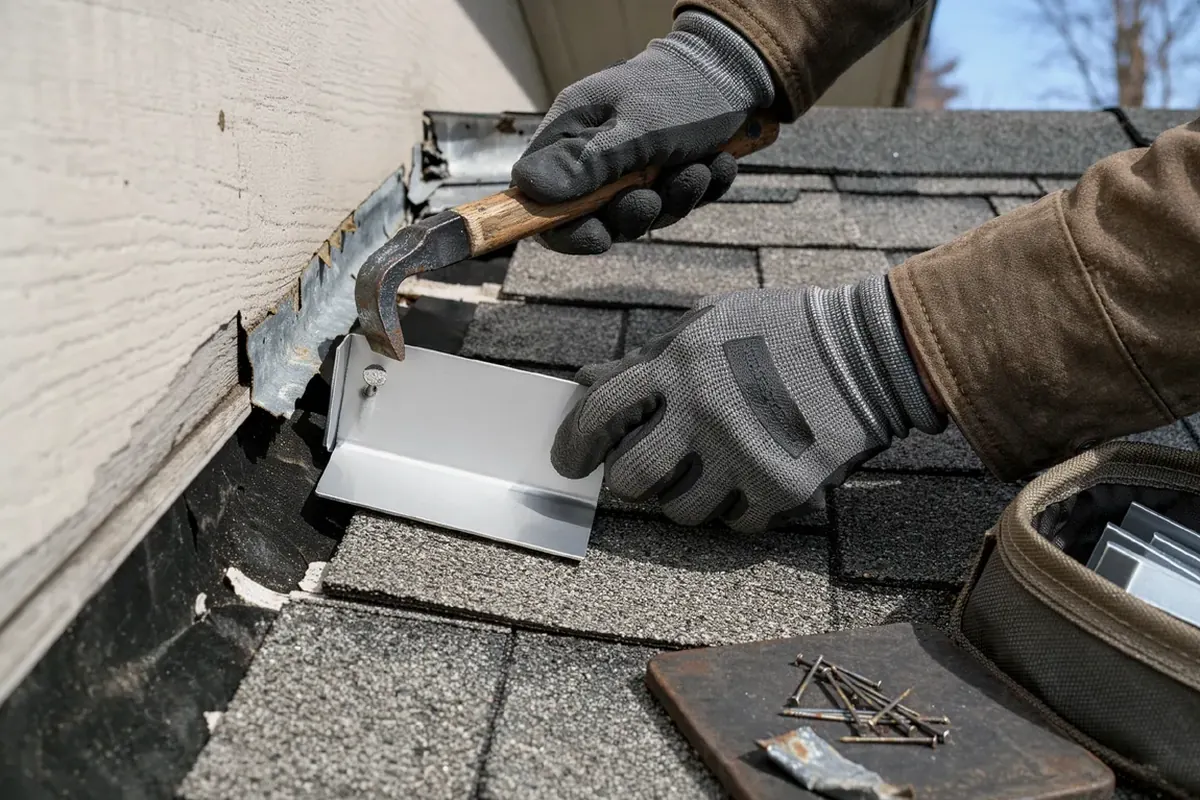
Flashing is the thin metal or membrane that seals the joints where a roof meets a wall, vent, valley or edge, and when it fails water slips behind the roofing. Many leaks that look like worn shingles or tile turn out to be flashing. Call the number on this page to be connected with a local roofing contractor in Thonotosassa.
Signs the flashing has failed
Brown stains on a ceiling next to an exterior wall, water marks around a vent pipe, or damp drywall under a roof edge often trace to flashing. Rust streaks, lifted metal and gaps you can see from the yard are warning signs. Check after each storm.
Wind-driven rain gets behind it
In a tropical system, rain does not just fall, it is pushed sideways and upward behind laps and counterflashing. Joints that stay dry in normal storms can leak during one. Good laps and tight fasteners matter most in these events. Tight fasteners matter more than extra sealant.
Leaves and needles from oaks and pines in Thonotosassa pile up in valleys and against walls, holding water on the flashing and speeding rust and sealant failure.
On larger rural lots around Thonotosassa, outbuildings, porches and room additions add extra roof-to-wall joints, and each has its own flashing that may need attention.
Roof notes for Thonotosassa
On permits, the Hillsborough County Building Services says: re-roof permits go through HillsGovHub, where the applicant agrees to an attestation covering code compliance of decking, underlayment and roof covering. The county sets a progress check and a final roof inspection.
If insurance is paying, Florida law bars a roofer from offering a gift, rebate or deductible waiver for a roof inspection or claim, and a roofer can't interpret your policy or adjust the claim unless also a public adjuster.
The Florida Building Code limits piecemeal fixes: replacing or recovering more than a quarter of a roof section within 12 months can mean the whole section must be redone to current code.
Big oaks and pines around Thonotosassa drop leaves and needles that fill valleys and gutters and keep parts of the roof shaded and damp.
Calls from Thonotosassa are often matched with roofers who also cover Brandon, Seffner and Dover.
Repair, replace or reflash
Resealing costs the least and lasts the shortest time. Replacing individual pieces fits when most of the run is sound. Full reflashing of a joint makes sense when the metal is rusted through or the original lap was wrong. Ask the roofer to explain the choice. The lowest-priced fix is rarely the longest lasting.
Fixing a stucco-to-roof joint
The roofer may cut a thin slot in the stucco, fit a metal counterflashing into it and lap it over the roof-level flashing. Then the slot is sealed and the surface patched. That keeps water from slipping between the wall and the roof. The finish patch is often a separate trade.
Storm warning ahead
If a tropical system is approaching, photograph the roof edges, vents and walls from the ground first. Move belongings from rooms that have shown stains. Loose flashing can become a flying hazard, so keep clear of the yard during strong wind. Wait for calm weather before assessing damage.
Roof Flashing Repair questions in Thonotosassa
Can flashing be repaired without a new roof?
Does salt air shorten flashing life?
Is flashing damage covered by insurance?
Do tile roofs have flashing problems?
More roofing services in Thonotosassa
Roof Flashing Repair nearby
Helpful guides
Sources
Last updated: