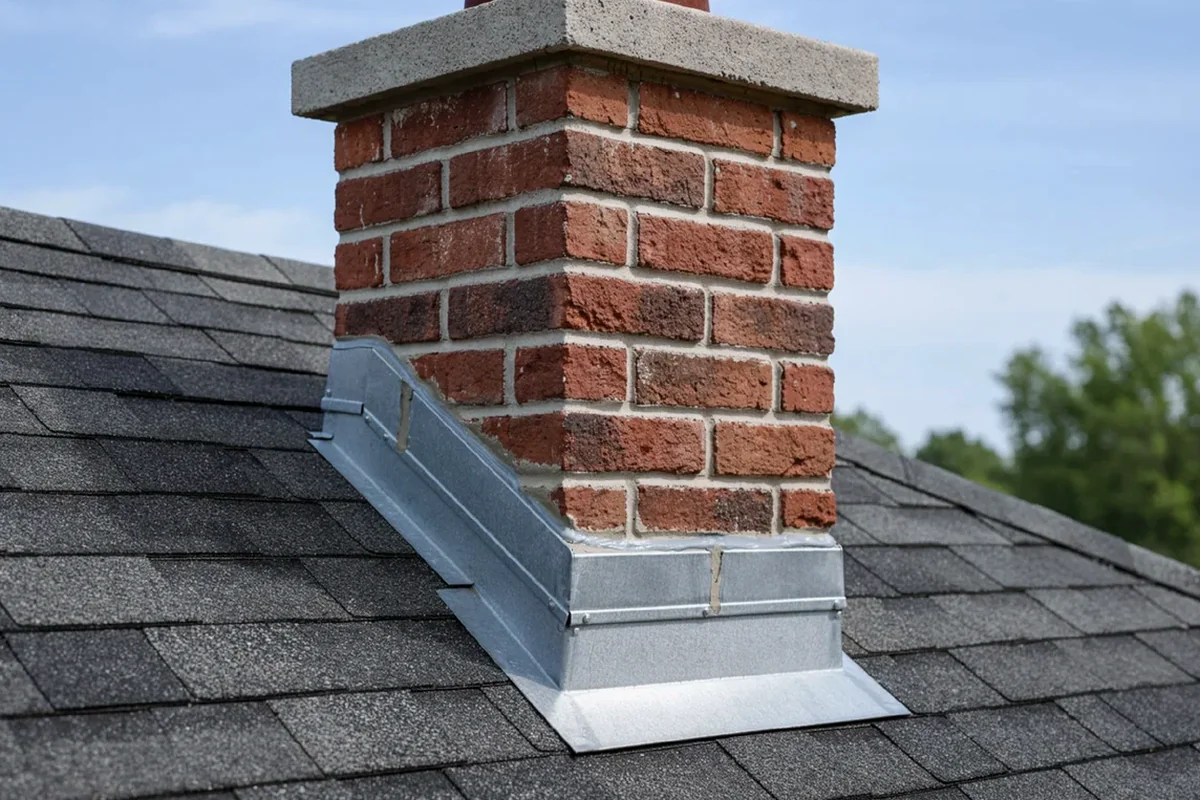
Counterflashing is the second layer of metal tucked into the masonry or chase wall and laid over the roof-level flashing. When the mortar around it crumbles or the metal rusts, water slips behind it, and it can be reset or replaced. Call the number on this page to be connected with a local roofing contractor in Palm Harbor.
Looking from the yard
With binoculars, look for gaps between the metal and the brick, rust, lifted pieces, cracked mortar and a crown that has chipped. A leaning cap or missing spark screen can also appear from below. Note anything unusual and photograph it. A zoom lens on a phone works too.
The uphill side and the cricket
Water running down the roof hits the back of a wide chimney and piles up. A cricket, a small peaked saddle behind the stack, sheds it to either side. Wide chimneys without one tend to leak at the back corners. A flat wall of brick above the roof invites pooling water.
Gulf and bay winds near Palm Harbor push rain behind counterflashing and can lift loose chase covers during a tropical storm.
Roof notes for Palm Harbor
Roofing permits for Palm Harbor addresses go through the Pinellas County Building Services. Its published rule: all re-roofing projects must have an in-progress inspection, requested through the county's access portal or automated inspection phone line.
Under Florida's roof-claim rules, a roof contract must tell you to check coverage with your insurer, and a contractor offering to waive your deductible is breaking state law.
The Florida Building Code limits piecemeal fixes: replacing or recovering more than a quarter of a roof section within 12 months can mean the whole section must be redone to current code.
Closer to the water, wind-driven rain is the usual leak test for a Palm Harbor roof, so flashing, ridge vents and tile edges get extra attention.
Summer brings near-daily afternoon thunderstorms and frequent lightning to the Tampa Bay area, so small flashing gaps get tested often from about July into early September.
Nearby, the same kind of help is available in Crystal Beach, Tarpon Springs and Oldsmar.
Doing it with a reroof
A chimney is easiest to flash correctly when the roofing is off. If a reroof is planned, new flashing goes in with the new underlayment. A roofer should tell you whether to wait, repair now or combine the work. Planning ahead avoids paying twice for the same joint.
Typical repair steps
- Lift roofing around the chimney.
- Remove old flashing and sealant.
- Check the sheathing for rot.
- Install step pieces, then counterflashing.
- Seal the top edge and replace the roofing.
Sound wood comes first. Ask to see the old metal when it comes off.
Avoid the quick caulk fix
Climbing a hot or wet roof to smear sealant around a chimney is how people fall, and caulk on damp brick rarely bonds. It also hides the real entry point. Leave it to a roofer with proper materials and safety gear. Wait for dry weather and a roofer.
More about Palm Harbor
Downtown Palm Harbor has a county-reviewed historic district where roof size, slope and type are expected to match the historic gable, hip and flat-with-parapet roofs found there.
Chimney Flashing Repair questions in Palm Harbor
Is caulk enough to fix chimney flashing?
Can I use the fireplace if it leaks?
Does chimney flashing repair need a permit?
Is chimney flashing replaced with a new roof?
More roofing services in Palm Harbor
Chimney Flashing Repair nearby
Helpful guides
Sources
Last updated: