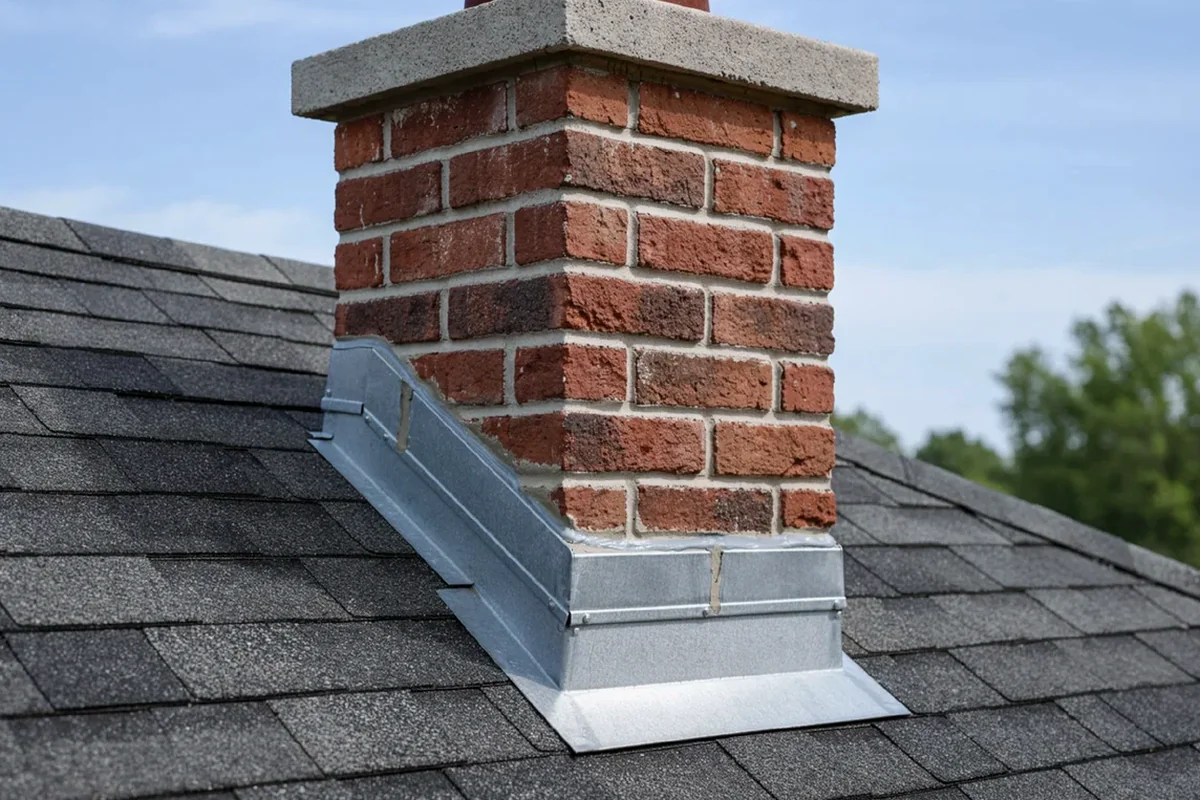
Counterflashing is the second layer of metal tucked into the masonry or chase wall and laid over the roof-level flashing. When the mortar around it crumbles or the metal rusts, water slips behind it, and it can be reset or replaced. Call the number on this page to be connected with a local roofing contractor in Hudson.
Looking from the yard
With binoculars, look for gaps between the metal and the brick, rust, lifted pieces, cracked mortar and a crown that has chipped. A leaning cap or missing spark screen can also appear from below. Note anything unusual and photograph it. A zoom lens on a phone works too.
Why chimneys leak at the roof
A chimney and a roof move at different rates, so the joint between them flexes through hot days and cool nights. Sealant dries and cracks, metal rusts, and mortar crumbles. Water then finds the gap, usually during a heavy storm. Shaded stacks age differently from sunny ones.
Chimneys on 1980s houses around Hudson may be rarely used, so leaks can go unnoticed for years until stains finally appear on the ceiling or hearth wall.
Close to the water in Hudson, exposed screws and thin metal rust quickly, so chimney work there should use corrosion-resistant materials.
Repair or full reflash?
If only a few pieces have rusted or loosened, they can often be replaced. If the metal is rusted throughout or the original lap was wrong, reflashing the whole chimney is the better path. Ask the roofer to explain the choice. The lowest-priced fix is rarely the longest lasting.
How counterflashing is set
The roofer cuts a thin slot in the mortar joint, tucks the metal into it and seals it. On a stucco or siding chase, the metal goes behind the finish. Surface sealant alone is not counted as proper counterflashing. Ask whether the slot is sealed and the metal secured.
Keep a short record
Write down dates, weather and where water appeared, and keep the photos together. A log lets the roofer see a pattern, and it helps with an insurance question if one comes up. A simple note on the phone works fine.
Before you call in Hudson
Hudson is unincorporated, so reroof permits and inspections go through the county office, the Pasco County Building Construction, rather than a city hall.
Florida sets a deadline for storm claims: notice of a new or reopened property claim is due within one year of the date of loss, so don't sit on roof damage.
A reroof is a good time to add a secondary water barrier and better roof-to-wall connections; Florida's mitigation inspection form can turn those into windstorm premium discounts.
Closer to the water, wind-driven rain is the usual leak test for a Hudson roof, so flashing, ridge vents and tile edges get extra attention.
Calls from Hudson are often matched with roofers who also cover Spring Hill, Port Richey and New Port Richey.
Chimney Flashing Repair questions in Hudson
Why does my chimney leak where it meets the roof?
Do framed chimney chases leak differently?
Does chimney flashing repair need a permit?
Can I fix chimney flashing myself?
More roofing services in Hudson
Chimney Flashing Repair nearby
Helpful guides
Sources
Last updated: